
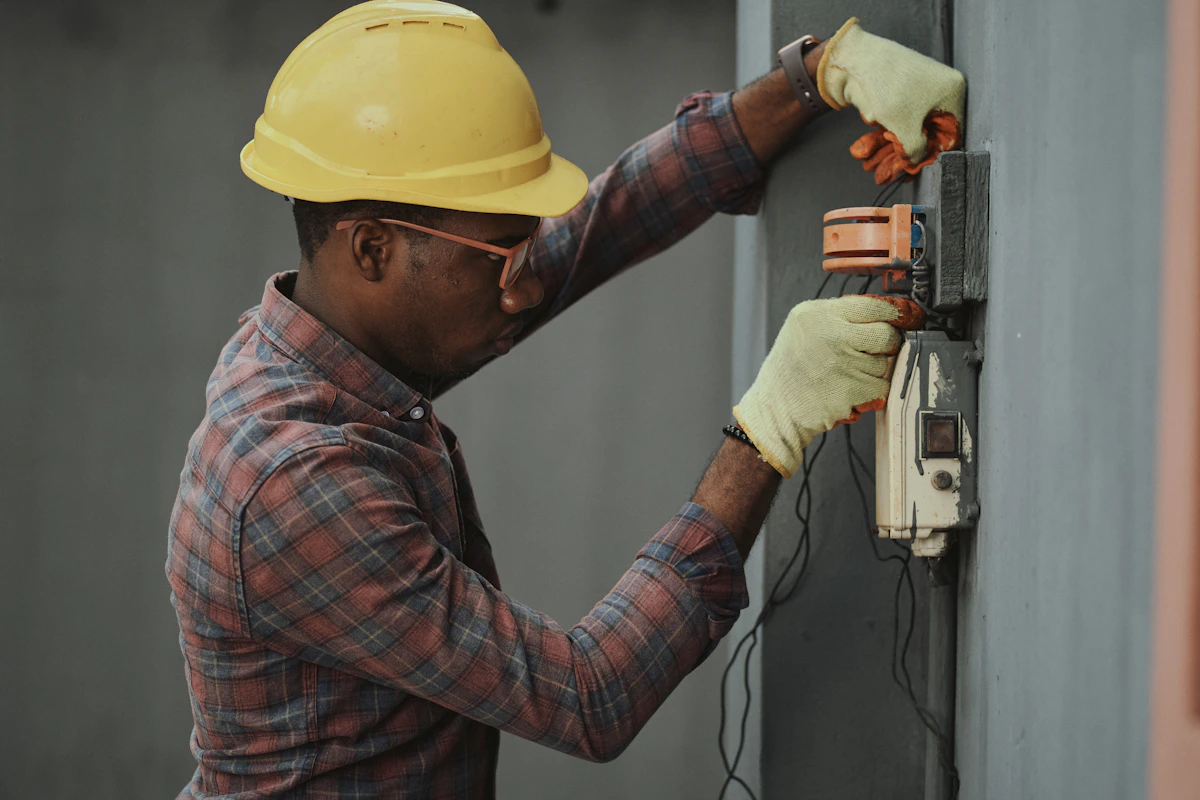
UL 1008 Mechanical Interlock & Anti-Islanding Protection
In Iowa, utility interconnection is governed by strict safety regulations, including Iowa Administrative Code 199-45 and NEC Article 702. When an ice storm or summer derecho knocks down utility wires, power lines may still be connected to residential electrical panels.
If a generator were connected without a transfer switch, it would backfeed 240 volts through your transformer, stepping it up to 7,200+ volts on utility poles. A UL 1008 certified transfer switch utilizes a double-throw mechanical interlocking mechanism that physically prevents the generator and utility grid from ever connecting simultaneously.
The 5-Phase Automatic Transfer Cycle
During a blackout, your ATS operates completely autonomously without manual intervention:
Grid Outage Detection
The ATS internal control board monitors utility voltage on both 120V legs. If grid voltage drops below 80% for longer than 3 seconds, the switch initiates the emergency sequence.
Engine Ignition & Warm-Up
The switch sends a 2-wire start signal to the standby generator outside. The engine cranks, starts, and runs for 8 to 12 seconds to stabilize oil pressure, engine speed (3,600 RPM), and 60Hz frequency.
Mechanical Break-Before-Make
Once generator output is verified, the heavy-duty solenoid or motorized operator snaps over, mechanically disconnecting utility contacts before engaging the generator bus bar.
Whole-Home Power Delivery
Your home's entire main electrical panel is energized. Sump pumps, heating, cooling, lighting, and appliances resume normal operation seamlessly.
Grid Restoration Verification
When MidAmerican or Alliant restores grid power, the ATS monitors utility voltage for a continuous 5-minute stabilization period to ensure the grid is steady before transferring back.
Engine Cool-Down Cycle
After re-engaging utility power, the ATS signals the generator to run unloaded for 2 to 5 minutes to dissipate engine heat before shutting down into standby readiness mode.
Service-Entrance Rated vs. Non-Service Rated Switches
Whole-Home (Service-Entrance Rated) ATS
A Service-Entrance Rated (SE-Rated) transfer switch includes a built-in 200-amp main circuit breaker and is placed directly between your outdoor utility meter and indoor electrical panel. Because it acts as the primary service disconnect for the entire residence, every single branch circuit in your home—from central A/C and sump pumps to kitchen outlets and bedrooms—is backed up automatically. This is the gold standard for Iowa residential installations.
Partial-Home (Subpanel Transfer) Switch
A non-service rated switch feeds an auxiliary subpanel that only houses 10 to 16 selected circuits. While slightly less expensive on initial hardware, it leaves secondary appliances without power and limits flexibility if your family's electrical needs change. Turnkey whole-home installations coordinated through VoltGuard Iowa almost exclusively utilize whole-home service-entrance rated equipment.
Utility Coordination: MidAmerican Energy & Alliant Energy Protocols
Connecting an Automatic Transfer Switch between the electric meter and main breaker panel cannot be performed on live utility feeders. Our partner Master Electricians execute a strictly regulated utility coordination process:
Permit Filing & Utility Work Order
Our contractors pull electrical trade permits through your local municipal building department and submit formal utility service orders with MidAmerican Energy, Alliant Energy, or municipal utilities (such as CFU or MP&W).
Coordinated Meter Disconnect
On installation morning, an authorized utility technician or certified Master Electrician cuts the utility seal and pulls the glass electric meter base, completely de-energizing the incoming service entrance cables.
ATS Mounting & Feed Termination
Electricians mount the NEMA 3R outdoor enclosure or indoor switchboard, terminate heavy-gauge copper conductors, bond system grounds to water mains and ground rods per NEC 250, and install low-voltage control communication wiring.
Municipal Inspection & Meter Re-Energization
The city trade inspector conducts the rough-in and final electrical inspection. The utility re-inserts and re-seals the electric meter, restoring grid power while your new standby system enters 24/7 autonomous monitoring.
Automatic Transfer Switch FAQs
Straight answers regarding transfer switch sizing, enclosures, and utility disconnects in Iowa.
What is an Automatic Transfer Switch (ATS) and why is it required in Iowa?
An Automatic Transfer Switch (ATS) is an intelligent, high-amperage electrical switchboard that acts as the brain of your standby power system. It continuously monitors utility grid voltage. When the grid fails, it signals the generator to start, mechanically disconnects your home from the utility grid, and transfers electrical loads to the generator within 10 to 20 seconds. Under National Electrical Code (NEC) Article 702 and Iowa Administrative Code 199-45, an approved transfer switch is legally mandatory to prevent lethal electrical backfeeding into power lines.
What does 'UL 1008 Certified' mean and why do Iowa utilities require it?
UL 1008 is the rigorous Underwriters Laboratories safety standard specifically governing transfer switches for emergency power systems. It mandates a 'break-before-make' mechanical double-throw mechanism that guarantees the electrical connection to utility power lines is completely broken before the generator connection is closed. Both MidAmerican Energy and Alliant Energy strictly require UL 1008 certified switches to ensure zero electrical backfeed that could electrocute linemen repairing storm-damaged lines.
What is the difference between a Service-Entrance Rated ATS and a Standard Subpanel Switch?
A Service-Entrance Rated ATS contains its own 200A main service disconnect breaker and is installed directly between your outdoor utility electric meter and your home's main distribution panel. This allows the generator to back up every single circuit in your main breaker box. A standard non-service-rated switch only powers an isolated 10 to 16-circuit subpanel. Almost all turnkey whole-home installations in Iowa utilize 200A Service-Entrance Rated transfer switches.
How do electricians coordinate with MidAmerican Energy or Alliant Energy for installation?
Installing a 200A service-entrance ATS requires de-energizing the main power line entering your home. Our partner Master Electricians schedule a coordinated utility meter pull (service disconnect) with MidAmerican or Alliant dispatch. The electrician installs the ATS, routes new copper conductors, grounds the system per NEC Article 250, schedules municipal electrical inspection, and coordinates the meter re-insertion with the utility.
Where is the Automatic Transfer Switch physically installed?
The ATS is typically mounted on an exterior wall immediately adjacent to your electric utility meter, or mounted indoors in the basement or utility room directly next to your main electrical panel. Exterior installations must utilize a NEMA 3R aluminum weather-resistant enclosure capable of withstanding Iowa rain, snow, and ice.
How long does power cut over take during a storm blackout?
When grid power drops out, the ATS waits 3 to 5 seconds to ensure the outage is not a momentary utility recloser flicker. It then signals the generator engine to start. Once the generator stabilizes at 60Hz and 240V (roughly 8 to 12 seconds), the ATS mechanically snaps over. The entire transition from darkness to full home power takes approximately 10 to 20 seconds.
Looking for complete project pricing? Review our 2026 Iowa Generator Cost & Rebates Guide or discover our Turnkey Installation Process.
Certified ATS Installation Across 32 Iowa Communities
Our Master Electrician network coordinates utility disconnects and municipal electrical permits statewide: