
Precision Engineering from Pad to Panel
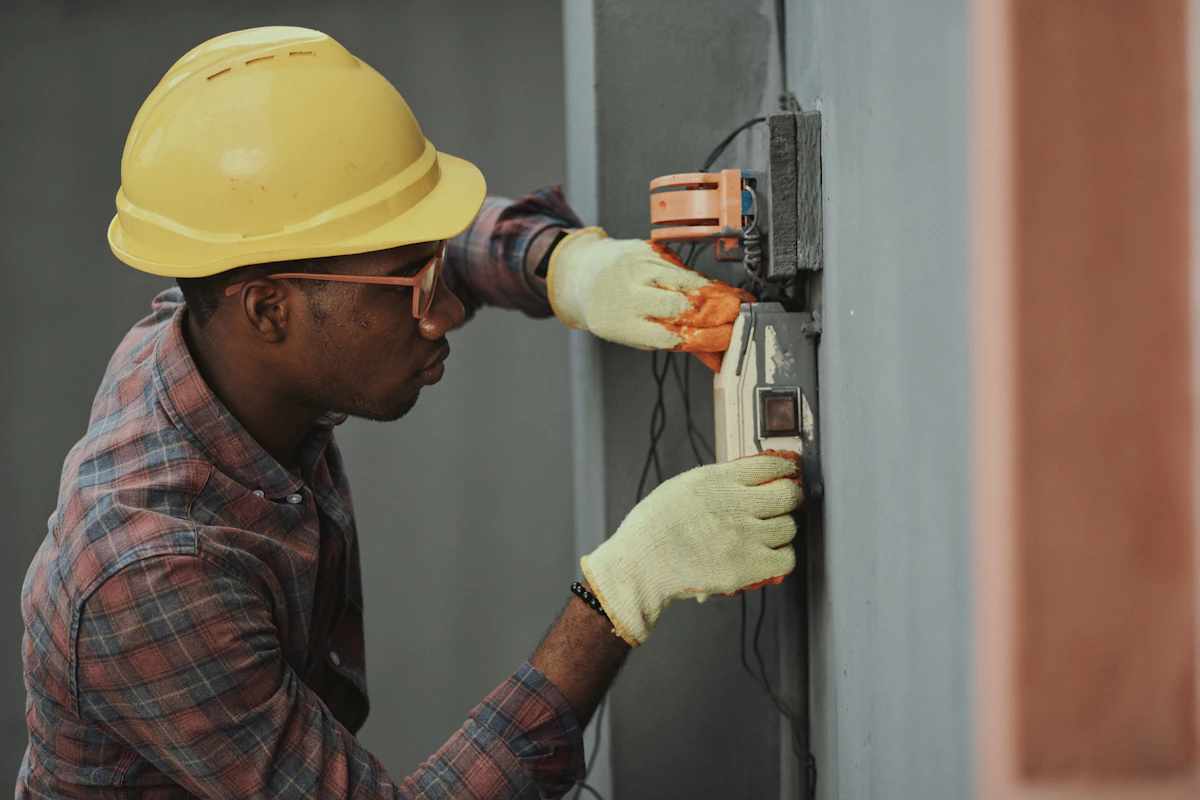
Installing a whole-home standby generator is not a general handyman task. Our network connects you with vetted Iowa Master Electricians who coordinate every phase: starting load calculations, concrete foundation leveling, high-pressure gas plumbing, and code-compliant Automatic Transfer Switch (ATS) tie-ins.
Our 5-Stage Turnkey Installation Process
Electrical Load Calculation & Sizing
We do not guess generator capacity. A certified technician performs an in-depth calculation of your home's starting (inductive) wattage and running wattage. We account for high-draw appliances—such as central air conditioning compressors, well pumps, geothermal loops, and electric water heaters—to size a 14kW, 18kW, 22kW, or 26kW unit. We design custom solutions across both the Des Moines metropolitan area and Cedar Rapids and Linn County.
Site Selection & Concrete Pad Mounting
Under NFPA 37 and local Iowa municipal codes, generators must maintain minimum clearances: typically 5 feet from operable windows, doors, and vinyl siding, and 3 feet from utility meters. Units are anchored to engineered pre-cast concrete slabs with vibration-damping composite pads.
Fuel Supply Plumbing (Natural Gas or LP)
A whole-house standby generator requires substantial fuel volume (often 150,000 to 300,000 BTU/hr under full load). In natural gas homes, we coordinate directly with MidAmerican Energy or Alliant Energy to evaluate meter gas pressure (2-psig systems or high-flow meters). For rural properties without gas mains, we coordinate liquid propane (LP) tank regulators.
Automatic Transfer Switch (ATS) Wiring
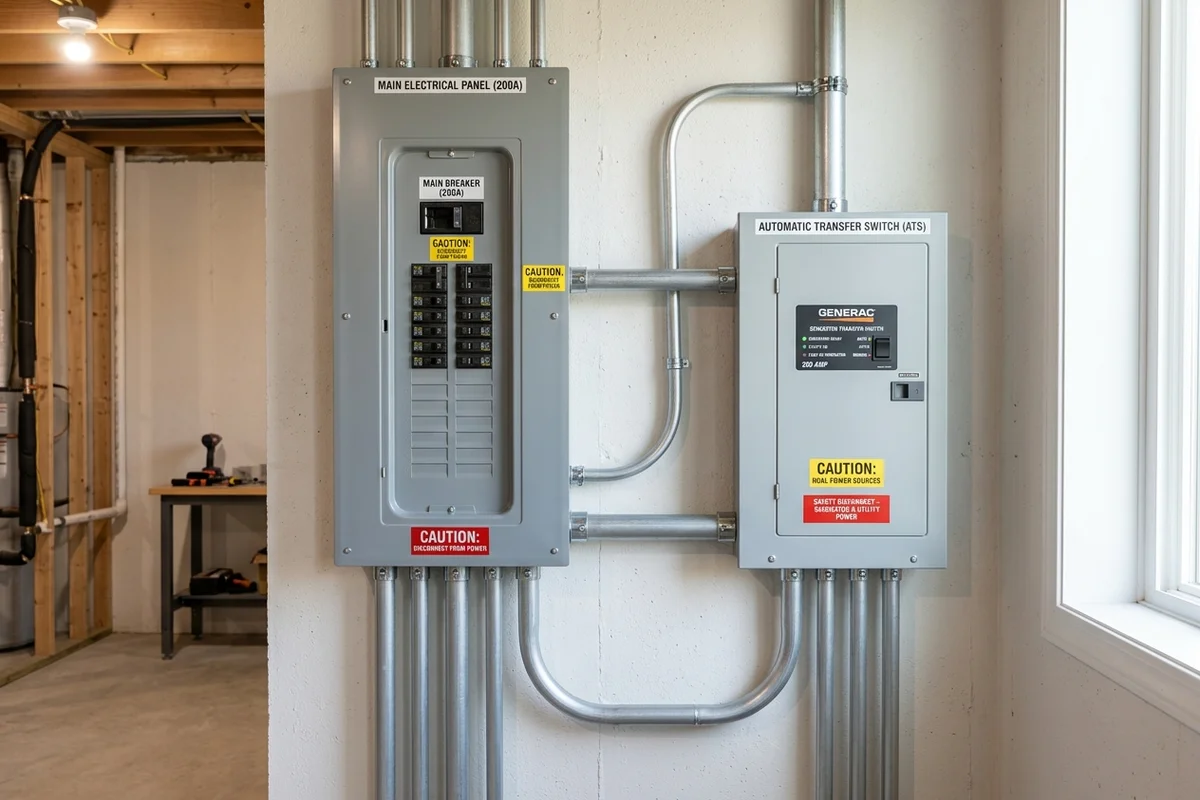
The ATS is the electrical brain of your backup system. Installed between your utility meter and your main distribution panel, the ATS monitors line voltage. When the Iowa grid drops below acceptable thresholds, the ATS automatically signals the generator to start, isolates the utility feed, and connects backup power in 10 to 20 seconds.
Municipal Permitting, Inspection & Commissioning
Partner contractors pull required electrical and mechanical/gas permits with local city or county building authorities. For county-specific permit fees and utility coordination timelines, consult our Iowa Generator Cost & Permitting Guide. After thorough multi-point load testing and utility meter clearance inspections, your warranty is registered and live testing is validated.
Smart Load-Shedding & Transfer Switch Safety
A central challenge during Iowa winter outages is balancing multiple high-draw appliances simultaneously. Our installations feature intelligent Smart Management Modules (SMM) that prioritize emergency heating and sump pump circuits while momentarily shedding secondary loads like electric ranges and dryers.
This intelligent energy balancing allows a cost-effective 20kW or 22kW generator to safely power a 3,500 sq. ft. home without overloading the engine or tripping circuit breakers. To keep switch gear contacts and micro-controllers responsive over decades of service, review our comprehensive standby generator maintenance and repair protocols.
Sub-Zero Winter Packages: Guaranteed Starts at -20°F
Standard engines struggle in Iowa polar vortex events when conventional battery cranking amps plummet and standard engine oil turns thick and sluggish. Every standby generator installation in our Iowa network includes cold-weather preparation:
Thermostatic Battery Warmers
Heating blankets keep lead-acid and AGM batteries at optimal cranking temperatures during severe winter freezes.
Oil Filter & Block Heaters
Engine oil warmers ensure instant synthetic 5W-30 flow upon cold start, preventing engine scoring.
Automated Exercise Cycles
Weekly bi-monthly self-test runs ensure the carburetor, fuel lines, and electrical stators remain conditioned year-round.
Iowa Generator Installation FAQs
Straight answers to homeowners' most common questions regarding sizing, permits, fuel lines, and timelines.
How do I calculate what size generator my Iowa home needs?
Generator sizing is calculated using starting (inductive) wattage and continuous running wattage. An average 2,000–2,500 sq. ft. Iowa home with central air conditioning (3–4 ton) and gas heat typically requires an 18kW to 22kW standby generator. Larger homes (3,000+ sq. ft.) with dual AC units, well pumps, electric water heaters, or EV chargers require 24kW to 26kW+ units. A licensed electrician performs an NEC Article 220 demand calculation to determine exact capacity.
How long does a standby generator installation take in Iowa?
Turnkey installation typically takes 1 to 2 business days for physical on-site work (pad placement, gas line connection, and transfer switch wiring). However, the end-to-end process—including municipal permit approvals in Polk or Linn County, gas meter upgrades from MidAmerican Energy or Alliant Energy, and final city inspections—usually spans 1 to 3 weeks.
Do I need permits for standby generator installation in Iowa?
Yes. Iowa state law and municipal codes require both an electrical permit and a mechanical/plumbing permit. Electrical permits cover the Automatic Transfer Switch (ATS) wiring and main panel tie-in under NEC 702. Mechanical permits cover the natural gas or liquid propane piping under NFPA 54. In communities like Des Moines, West Des Moines, and Cedar Rapids, municipal inspectors must sign off on the installation before final commissioning.
Can my generator run on natural gas or liquid propane (LP)?
Yes. Most residential standby generators (Generac, Kohler, Briggs & Stratton, Cummins) feature dual-fuel capability and can operate on either utility natural gas or liquid propane. Natural gas provides an uninterrupted, continuous fuel supply without refueling deliveries. For rural Iowa properties without natural gas lines, a 250 to 500-gallon propane tank provides multiple days to weeks of continuous emergency power.
What is an Automatic Transfer Switch (ATS) and why is it necessary?
An Automatic Transfer Switch (ATS) is an electrically interlocked device installed between your utility meter and distribution panel. Within 10 to 20 seconds of a grid outage, the ATS safely disconnects your home from the utility grid and routes emergency power from the generator. This isolation prevents dangerous 'backfeeding' into power lines, protecting utility linemen working to restore the grid (mandated under Iowa Administrative Code 199-45).
What are the NFPA 37 setback and clearance requirements in Iowa?
NFPA 37 mandates that stationary generator engines must be installed at least 5 feet away from any operable window, door, or exterior vent to prevent carbon monoxide infiltration. In addition, generators must maintain a minimum of 18 to 36 inches from exterior walls depending on the manufacturer's non-combustible fire test certification, and at least 3 to 5 feet from electric and gas meters.
Will a standby generator keep my home warm during an Iowa polar vortex?
Yes. All standby installations engineered by our partner contractors include sub-zero cold-weather accessories, such as thermostatic battery warmers and engine oil heaters. These systems prevent oil thickening and battery failure, guaranteeing instant automated starting even at temperatures reaching -20°F.
Can an undersized generator damage my appliances or HVAC system?
Yes. When high-amperage appliances like air conditioning compressors or well pumps start up, they draw inrush currents 2 to 3 times their running wattage. An undersized generator will experience voltage dips and frequency fluctuation, which can overheat motors, trip breakers, or damage sensitive electronic circuit boards. We implement Smart Management Modules (SMM) to safely shed non-critical circuits and protect critical loads.
How much does a whole-home standby generator installation cost in Iowa?
Turnkey residential standby generator installation in Iowa typically ranges from $8,000 to $15,000+, depending on generator wattage (14kW to 26kW), fuel type, transfer switch amperage (100A or 200A), distance from gas meter and electrical panel, and local permit fees. Complete cost details, labor line items, and utility rebate options can be found in our comprehensive Iowa Generator Cost and Rebates Guide.
What ongoing maintenance is required after installation?
Like any vehicle engine, standby generators require periodic maintenance to remain reliable. Recommended maintenance includes an annual inspection, synthetic 5W-30 oil and filter changes every 100–200 operating hours (or annually), spark plug replacement, battery load testing, and transfer switch exercise verification. Routine maintenance plans ensure warranty compliance and flawless emergency starts.
Questions about equipment pricing or utility rebates? Review our detailed Iowa Generator Cost Guide or explore our Annual Maintenance Plans.